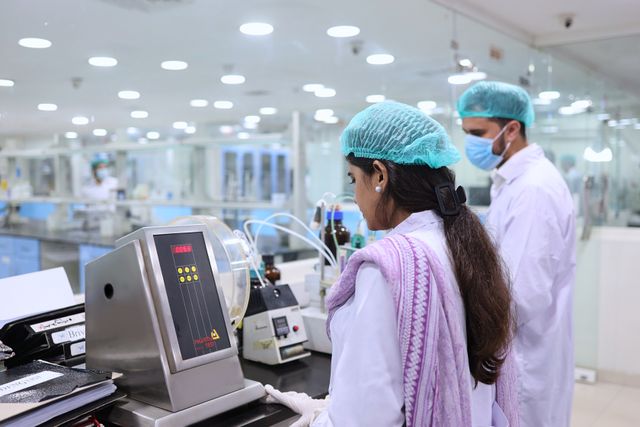
GMP consultant Australia - What We Do
Good Manufacturing Practice (GMP) is the quality framework used to control how therapeutic goods are manufactured, tested, released, stored and distributed. In Australia, manufacturers of therapeutic goods may be required to comply with GMP requirements administered by the Therapeutic Goods Administration (TGA), with applicable requirements depending on the type of product, manufacturing activity and regulatory pathway.
Quality Systems Now provides GMP consulting support to organisations that need to establish, strengthen, assess or maintain compliant quality systems. Our work focuses on practical implementation: translating regulatory and scientific requirements into controlled processes, documented systems, competent personnel and objective evidence that the system is operating as intended.
GMP Systems Built Around the Manufacturing Process
An effective GMP system is not simply a collection of procedures. It is an interconnected control system covering materials, facilities, equipment, personnel, manufacturing operations, testing, documentation, deviations, changes and product disposition.
We work with organisations to assess how these elements interact and identify weaknesses that could affect product quality or regulatory compliance. The resulting quality system should reflect the actual manufacturing process rather than relying on generic documentation that does not correspond to operational reality.
This may involve developing or improving the Pharmaceutical Quality System, defining responsibilities, establishing quality procedures, developing controlled forms and records, and creating mechanisms for monitoring and continuous improvement.
Quality Risk Management
Risk-based decision making is fundamental to modern GMP systems. Not every process, document or control presents the same level of risk, and resources should be directed toward issues that can materially affect product quality, patient safety, data integrity or compliance.
Quality Systems Now can support structured quality risk management activities, including identification of hazards, assessment of potential consequences, evaluation of existing controls and determination of appropriate additional controls.
The objective is not to eliminate every theoretical risk. It is to establish scientifically and logically justified controls that reduce significant risks to an acceptable level and provide evidence that those controls remain effective.
Audits and GMP Readiness
A regulatory inspection can expose weaknesses that may not be obvious during routine operations. Internal audits and independent GMP assessments provide an opportunity to identify those weaknesses before they become regulatory findings.
Our consulting work can include comprehensive GMP audits, targeted assessments and readiness reviews. These assessments examine the quality system and operational controls against applicable requirements and the organisation's own procedures.
Findings are most useful when they explain the underlying problem rather than simply identifying a missing document. We therefore focus on evidence, root causes, system effectiveness and practical corrective actions.
Corrective and Preventive Action
A deviation, audit finding, complaint or other quality event should lead to an investigation proportionate to its potential impact. Corrective and Preventive Action (CAPA) systems provide a structured mechanism for addressing identified problems and preventing recurrence.
We assist with the investigation and management of quality events, including root cause analysis, corrective actions, preventive actions and effectiveness checks.
A strong CAPA system does not treat every problem as an isolated event. Recurring deviations, related findings and trends can indicate weaknesses in a broader process. Identifying those patterns can lead to more effective systemic improvements.
Validation and Qualification
GMP controls must be supported by appropriate evidence. Depending on the operation, this may include qualification of facilities and equipment, validation of processes, cleaning validation, analytical method validation or verification, computerised system controls and other documented activities.
Quality Systems Now helps organisations develop validation strategies and documentation appropriate to their processes and regulatory obligations.
The scientific principle is straightforward: critical processes should be demonstrated to perform consistently and produce intended results. The extent of qualification or validation should be justified by risk, process knowledge and the intended use of the system or equipment.
Documentation and Data Integrity
GMP decisions depend on reliable records. Manufacturing records, laboratory results, equipment records, environmental monitoring data, investigations and other quality records provide the evidence needed to demonstrate that controlled processes were followed.
We help organisations develop documentation systems that are clear, controlled and usable. This can include standard operating procedures, forms, specifications, protocols, reports, quality manuals and other controlled documents.
Data integrity is equally important. Records need to be attributable, legible, contemporaneous, original or appropriately controlled copies, accurate and complete, with appropriate controls for electronic records and systems. Good documentation should make it possible to reconstruct what happened, when it happened, who performed the activity and what decisions were made.
Laboratory and Analytical Quality
Testing laboratories supporting therapeutic goods require controls that ensure analytical results are scientifically sound, reliable and traceable. Laboratory quality systems can include procedures for sample management, methods, equipment, reference materials, calculations, results review, investigations and record control.
Our consulting services can help laboratories evaluate their quality systems and align laboratory practices with applicable GMP and quality requirements.
Where analytical methods are used for release, stability or other critical purposes, appropriate validation or verification and ongoing control are essential. The precise requirements depend on the method, product, intended use and applicable standards.
Biotechnology and Complex Manufacturing
Biotechnology organisations can face particularly complex quality challenges because biological materials and processes may be inherently variable and sensitive to changes in raw materials, process parameters, equipment and environmental conditions.
Quality systems for these organisations need to connect scientific understanding with manufacturing controls. Process knowledge, material controls, contamination control, environmental considerations, analytical testing and change management can all become important components of the overall system.
We work with biotechnology companies to develop quality infrastructure that can support development, scale-up, technology transfer and ongoing manufacturing activities without creating unnecessary administrative complexity.
Regulatory Compliance and TGA Expectations
Australian therapeutic goods manufacturers operate within a regulated environment. The applicable requirements depend on the nature of the goods and the activities being performed. For manufacturers subject to Australian GMP requirements, demonstrating compliance involves more than having procedures available. The organisation must be able to demonstrate that its procedures are implemented and that the resulting records provide objective evidence of control.
Our role is to help organisations understand applicable requirements and convert them into practical systems. This can include gap assessments, remediation planning, preparation for regulatory inspections and support with responses to identified deficiencies.
The emphasis is on sustainable compliance rather than preparing documentation solely for an inspection.
Building Internal Capability
External consulting should strengthen an organisation's own capability rather than create permanent dependence on consultants. Training, coaching and knowledge transfer are therefore important parts of effective quality system implementation.
We work with personnel responsible for quality, manufacturing, laboratory operations and management to develop an understanding of why controls are required and how they should operate in practice.
When personnel understand the scientific and regulatory rationale behind a requirement, procedures are more likely to be applied consistently and quality becomes part of normal operations rather than an administrative exercise.
Practical GMP Consulting
GMP compliance is ultimately demonstrated through controlled operations and evidence. Procedures need to match the process, personnel need appropriate training, equipment needs suitable controls, records need to be reliable and quality decisions need to be supported by documented evidence.
Quality Systems Now helps organisations identify where those controls are missing or ineffective and then develop practical solutions. Whether the requirement is a new quality system, remediation of an existing system, preparation for an inspection, laboratory quality improvement or support for biotechnology manufacturing, the work is grounded in scientific principles, risk management and regulatory requirements.
The objective is a quality system that works when the consultant is not in the room: clear enough for personnel to use, robust enough to control critical activities, and supported by evidence that demonstrates the processes are functioning as intended.
