LATEST NEWS
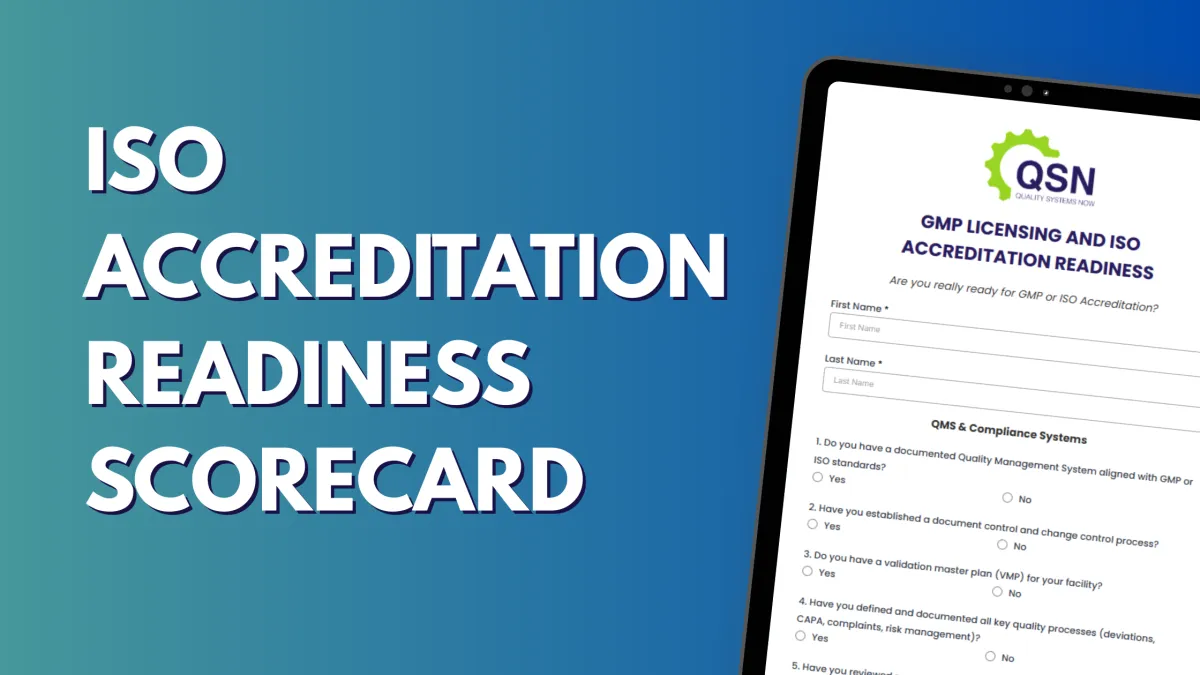
ISO Accreditation Readiness Scorecard
Ensuring a facility is prepared for GMP licensing or ISO accreditation is a critical step for therapeutic goods manufacturers, testing laboratories, and biotechnology companies. Regulatory inspections for GMP licensing and ISO accreditation are rigorous, and any overlooked compliance gaps can result in delayed approvals, corrective actions, or non-conformances. A structured readiness assessment, such as our GMP Licensing & ISO Accreditation Scorecard, provides a systematic approach to evaluate compliance across quality management systems (QMS), operational workflows, and documentation. This allows organisations to identify potential deficiencies and implement corrective actions before engaging regulators or accreditation bodies. Quality Systems Now specialises in assisting organisations to conduct these assessments and achieve full readiness, ensuring both operational efficiency and regulatory compliance.
The Importance of Readiness Assessment
GMP licensing and ISO accreditation require facilities to demonstrate consistent adherence to internationally recognised standards. While organisations may assume that routine internal practices are sufficient, inspections often reveal hidden gaps in QMS implementation, process control, or documentation accuracy. These gaps can include incomplete validation records, outdated SOPs, insufficient staff training records, or poorly controlled deviations. By conducting a readiness assessment, companies gain a clear picture of their compliance status, allowing corrective measures to be prioritised and implemented systematically. This proactive approach reduces the risk of non-conformances, protects patient safety, and maintains operational integrity.
Core Components of the Readiness Scorecard
A comprehensive GMP Licensing & ISO Accreditation Scorecard evaluates multiple aspects of facility operations and quality systems. Key components include:
Quality Management System (QMS) Effectiveness
The QMS is the backbone of compliance. The scorecard assesses whether:
Standard Operating Procedures (SOPs) are current, accessible, and adhered to consistently.
Document control processes ensure traceability, version control, and proper approvals.
Corrective and preventive actions (CAPA) are documented, implemented, and reviewed for effectiveness.
Management review processes are in place and demonstrate ongoing oversight of quality performance.
Evaluation of these areas ensures that the QMS provides a reliable framework for maintaining compliance across the organisation.
Process and Workflow Controls
Operational workflows must be clearly defined, controlled, and executed consistently to meet regulatory expectations. The scorecard examines:
Production and testing processes for critical control points and validation.
Workflow mapping and adherence to defined procedures.
Risk-based controls for critical processes, including deviations and non-conformance handling.
Continuous monitoring of process performance and corrective actions where necessary.
Assessing process control helps identify inefficiencies, inconsistencies, or uncontrolled variations that could jeopardise licensing or accreditation outcomes.
Documentation and Record Integrity
Documentation is central to both GMP and ISO compliance. The scorecard reviews:
Completeness and accuracy of batch records, test reports, and validation documentation.
Compliance with data integrity principles, ensuring records are accurate, attributable, legible, contemporaneous, original, and enduring (ALCOA+).
Traceability of materials, components, and product throughout the manufacturing or testing lifecycle.
Timely review, approval, and archival of documents.
This component ensures that all records reflect actual practices and can withstand regulatory scrutiny during inspections.
Personnel Competence and Training
Qualified and competent personnel are essential for compliance. The scorecard evaluates:
Staff training records, including GMP and ISO-specific education.
Role-specific competency assessments and periodic refresher training.
Understanding of procedures and adherence to operational standards through observation or audit.
Ensuring personnel competence mitigates the risk of errors and supports consistent compliance with regulatory requirements.
Facility and Equipment Readiness
Physical infrastructure and equipment must be suitable for regulated operations. The scorecard examines:
Facility layout, environmental controls, and cleanliness in line with GMP or ISO requirements.
Equipment qualification, calibration, and maintenance programs.
Adequacy of utilities, such as HVAC systems, water systems, and controlled storage areas.
Proper evaluation of facilities and equipment ensures reliable operations and reduces the likelihood of inspection findings related to environmental or equipment control.
Implementing the Scorecard
Conducting a readiness assessment using a structured scorecard involves:
Gap Identification: Systematically reviewing each component against regulatory and accreditation requirements.
Scoring and Prioritisation: Assigning scores to each area based on compliance status and risk impact.
Action Planning: Developing corrective and preventive actions to address identified gaps.
Verification and Follow-Up: Implementing actions, monitoring outcomes, and re-assessing to ensure gaps are closed effectively.
This structured approach allows organisations to convert assessment findings into actionable improvements, ensuring full readiness for GMP licensing or ISO accreditation inspections.
Benefits of the Readiness Scorecard
The scorecard provides multiple benefits for organisations:
Proactive Compliance: Identifies hidden gaps before regulatory inspections.
Risk Mitigation: Prioritises high-risk areas to prevent non-conformances.
Operational Improvement: Enhances workflow efficiency and quality performance.
Confidence for Inspections: Demonstrates a structured, evidence-based approach to regulators or accreditation bodies.
By leveraging a readiness scorecard, facilities can achieve greater certainty, reduce inspection-related disruptions, and support continuous improvement across all areas of operation.
Conclusion
GMP licensing and ISO accreditation are critical milestones for therapeutic goods manufacturers, testing laboratories, and biotechnology companies. A readiness assessment using a structured scorecard is essential to evaluate the effectiveness of QMS, operational workflows, documentation, personnel competence, and facility readiness. Identifying and addressing gaps proactively ensures compliance, reduces inspection risks, and supports sustainable operational excellence. Quality Systems Now specialises in guiding organisations through this process, providing expertise in GMP and regulatory compliance to help companies achieve full readiness and maintain high standards across their operations.
