LATEST NEWS
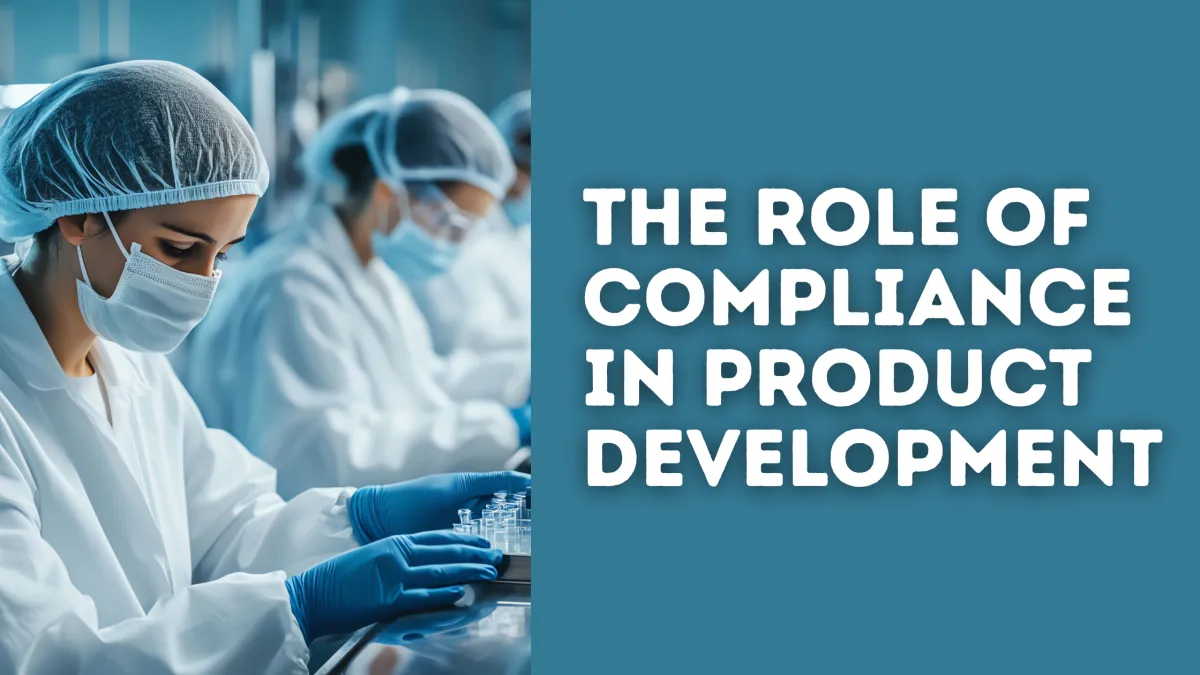
The Role of Compliance in Product Development
Product development compliance is a foundational requirement for organisations involved in the research, design, manufacture, and supply of therapeutic goods and related technologies. It provides the structured framework through which innovative concepts are translated into safe, effective, and reliable products that meet regulatory expectations and public health requirements. In highly regulated sectors such as pharmaceuticals, medical devices, in vitro diagnostics, and biotechnology, compliance is not an administrative afterthought but an integral scientific and operational discipline embedded across the entire product lifecycle.
Product Development Compliance
Compliance in product development ensures that scientific discovery progresses in a controlled, reproducible, and auditable manner. From the earliest stages of research, decisions must be supported by documented evidence, validated methods, and defined responsibilities. This approach protects data integrity, supports reproducibility, and ensures that outcomes are suitable for later verification, validation, and regulatory review. A compliant development process aligns innovation with patient safety, product quality, and regulatory confidence.
Transition from Discovery to Design
The transition from discovery to formal design represents a critical shift in product development. During discovery, exploratory research generates hypotheses, proof-of-concept data, and preliminary performance information. Compliance at this stage focuses on good scientific practice, accurate record keeping, and appropriate control of materials and data. As projects move into design, regulatory expectations increase. Design inputs must be clearly defined, traceable to user needs or intended use, and supported by scientific rationale. A structured design process ensures that innovation remains aligned with regulatory requirements without constraining scientific progress.
Design Control and Documentation
Design control is a core compliance requirement under standards such as ISO 13485 and is equally relevant to therapeutic goods development more broadly. It requires the systematic planning, execution, and documentation of design activities. Design outputs must be measurable and verifiable against defined inputs, while design reviews provide formal checkpoints to assess progress, risks, and compliance status. Proper documentation enables traceability, demonstrating how design decisions were made and how risks were identified and mitigated throughout development.
Verification as Scientific Confirmation
Verification activities provide objective evidence that design outputs meet specified design inputs. This stage relies on scientifically sound test methods, validated analytical procedures, and predefined acceptance criteria. Verification is not limited to final testing but occurs iteratively as development progresses. Compliance ensures that verification data are reliable, reproducible, and suitable for regulatory scrutiny. Robust verification supports confidence that the product has been designed correctly according to its specifications.
Validation and Intended Use
Validation extends beyond verification by confirming that the final product meets user needs and intended use under actual or simulated conditions. In therapeutic goods development, validation may include process validation, cleaning validation, analytical method validation, and, where applicable, clinical or performance evaluation. Compliance at this stage ensures that validation activities are planned, executed, and documented in accordance with applicable regulatory and quality standards. Validation provides assurance that the product performs as intended in real-world conditions.
Readiness for GMP Implementation
As product development progresses toward commercial manufacture, readiness for Good Manufacturing Practice becomes essential. GMP requires that manufacturing processes are defined, controlled, and capable of consistently producing products that meet quality specifications. Development activities must therefore generate sufficient process knowledge, control strategies, and quality data to support GMP implementation. Compliance ensures that scale-up activities, technology transfer, and process optimisation are conducted within a controlled framework that preserves product quality and patient safety.
Alignment with ISO 13485 Requirements
For medical devices and related technologies, ISO 13485 provides a comprehensive quality management system framework tailored to regulatory requirements. Product development compliance under ISO 13485 integrates risk management, design control, supplier management, and post-market considerations. Early alignment with ISO 13485 principles reduces rework, supports efficient regulatory submissions, and establishes a quality culture that extends beyond development into manufacturing and lifecycle management.
Regulatory Submission Readiness
Regulatory submissions rely on the cumulative evidence generated throughout product development. Compliance ensures that data are complete, traceable, and scientifically justified. This includes development reports, risk management files, validation summaries, and quality system documentation. A compliant development process reduces uncertainty during regulatory review, supports timely approvals, and facilitates constructive engagement with regulatory authorities. Submission readiness is therefore a direct outcome of disciplined compliance across all development stages.
Risk Management as a Continuous Process
Risk management is central to product development compliance. It involves the systematic identification, evaluation, control, and monitoring of risks related to product safety, quality, and performance. Risk management activities begin at concept stage and continue throughout the product lifecycle. Compliance frameworks require that risks are documented, reviewed, and updated as new information becomes available. This scientific approach to risk supports informed decision making and regulatory confidence.
Supporting Innovators Through Structured Compliance
Innovators often face the challenge of balancing rapid development with regulatory expectations. Structured compliance provides a pathway that supports innovation while maintaining scientific and regulatory rigour. By embedding compliance into development activities, organisations can move efficiently from discovery to design, verification, validation, and ultimately readiness for GMP, ISO 13485 certification, and regulatory submissions. This approach reduces delays, mitigates risk, and enhances the credibility of development outcomes.
The Contribution of Quality Systems Expertise
Quality systems expertise plays a critical role in guiding organisations through complex compliance landscapes. Specialists in GMP and regulatory compliance support therapeutic goods manufacturers, testing laboratories, and biotechnology companies by translating regulatory requirements into practical, science-based systems. This support enables organisations to build robust development frameworks, maintain compliance, and focus on delivering safe and effective products to market.
Conclusion
Product development compliance is an essential scientific discipline that underpins successful innovation in regulated industries. By integrating compliance across discovery, design, verification, validation, and manufacturing readiness, organisations establish a solid foundation for quality, safety, and regulatory acceptance. Quality Systems Now provides expertise in GMP and regulatory compliance, supporting therapeutic goods manufacturers, testing laboratories, and biotechnology companies as they navigate the complex journey from concept to compliant product.
